Wild Animals
 Sir589
14.11.2026 19:45
21 sections
In the main world (on /rtp, it is called Nature), as well as in the Nether and the End, there are over 80 species of wild animals. Each has its own biome, so you will encounter different animals in a forest than in a desert, on a volcano, or in the ocean. They often roam with their young. Most are harmless or only defend themselves, but predators will attack if you get too close, and a few animals are always dangerous.
💡 Looking for a specific animal? Check below to see which biome it lives in, then head there. Animals spawn around players, so you only need to walk around the correct biome for a while.
Where Each Animal Lives
Deciduous Forests
Oak, birch, maple, and dark forests, forests with trees on hills, and flower forests.

- Deer, raccoon, squirrel – shy and run away from you
- Owl – flies around the forest and perches in trees
- Brown bear – a predator. If you get too close, it growls and attacks. It also defends itself when injured.
- Wild boar – leave it alone; if you injure it, it will attack
- Skunk – if you hit it, it sprays you. You will feel dizzy for a while and won't be able to see anything.
- Crow – flies above forests and meadows
- Snail – slow and harmless, lives in forests, jungles, and swamps
Taiga, Snow, and Ice
Coniferous forests, taiga, redwood forests, snowy plains, tundra, and glaciers.
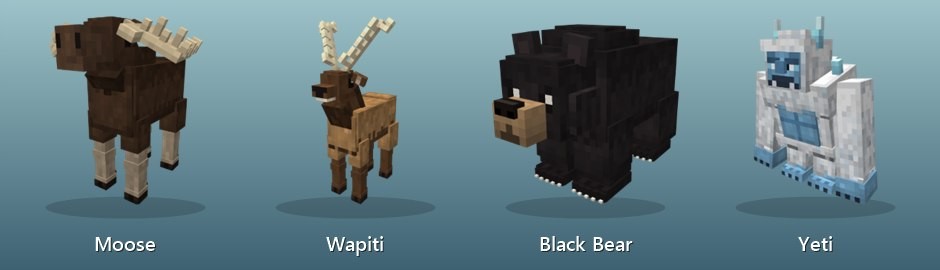
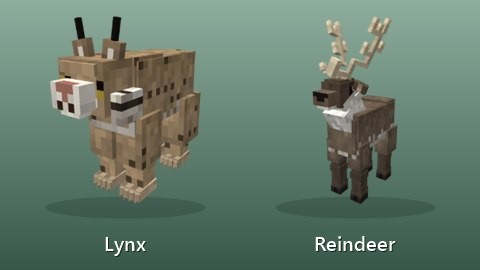
- Elk – shy and runs away
- Reindeer – can be tamed and saddled as a pet (see Pets)
- Black bear and lynx – predators that attack when approached closely
- Moose – defends itself when injured
- Yeti – only appears at night in snow and ice biomes and attacks players. It has 80 health and hits hard.
Mountains
Temperate, alpine, dry, and desert mountains. Snow leopards live in snowy mountains.
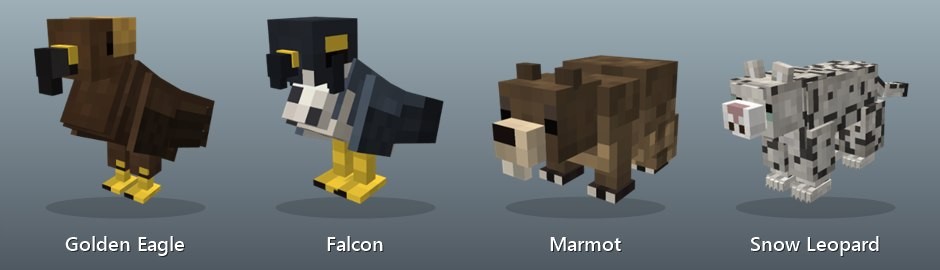
- Golden eagle and falcon – circle above the mountains and glide through the air
- Marmot – stands on its hind legs and keeps watch. If you scare it, it whistles and runs away.
- Snow leopard – rare, appears at night in snowy mountains and attacks players
Savanna
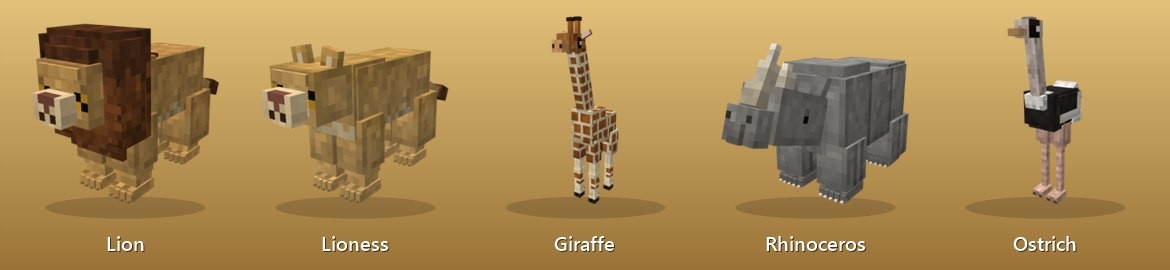
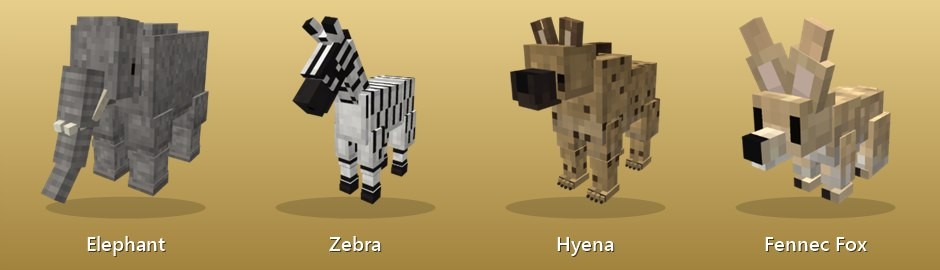
- Giraffe and zebra – shy and run away. Zebras travel in herds.
- Ostrich – the fastest runner, can be tamed and saddled as a pet
- Lion and lioness – predators that attack when approached closely
- Elephant and rhinoceros – peaceful, but defend themselves when injured. The elephant has 80 health, and the rhinoceros has 60.
- Hyena – hunts at night in packs of three and attacks players. You can occasionally hear its laughter.
- Vulture – circles above the savanna and desert
Desert and Mesa
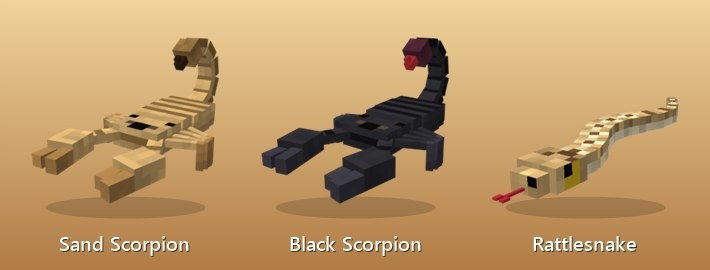
- Scorpions – come out at night and attack players. Their stings are poisonous. The black scorpion is rarer and stronger.
- Rattlesnake – attacks when approached closely, and its bite is poisonous
- Fennec fox – a small desert fox with huge ears, can be tamed as a pet
Jungle
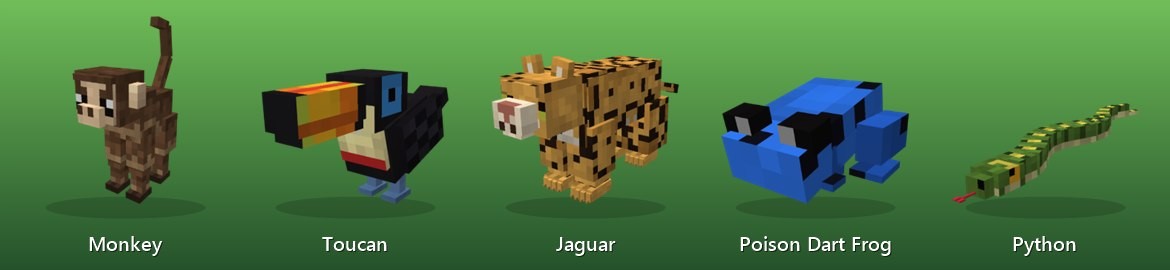
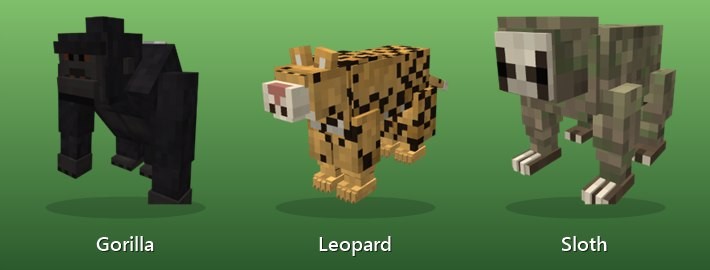
- Monkey and sloth – harmless. The sloth is extremely slow.
- Toucan and hummingbird – fly around the jungle. Hummingbirds also live in flower forests and cherry groves.
- Jaguar, leopard, and python – predators that attack when approached closely. The python is poisonous.
- Gorilla – peaceful, but if you injure it, it beats its chest and comes after you
- Poison dart frogs (blue, yellow, and red) – small frogs. If you injure one, it will poison you.
Swamps, Rivers, Plains, Beaches, and Caves

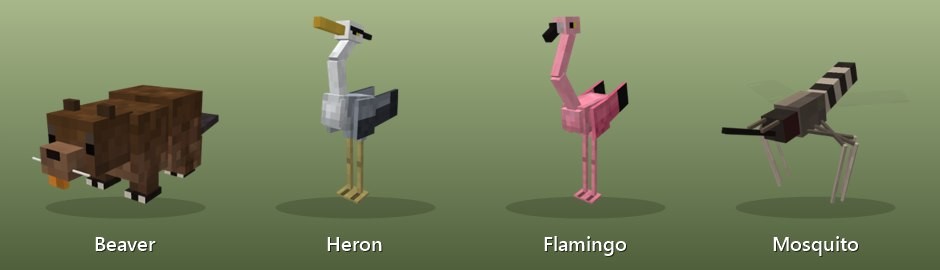
| Biome | Animals |
|---|---|
| Swamps and mangroves | crocodile (predator that attacks when approached closely), duck and drake, heron, stork, mosquito (at night) |
| Rivers | duck and drake (also swim on the surface), platypus, beaver |
| Floodplains and salt flats | flamingo |
| Flower plains, prairies, cherry grove | flower cow, stork, falcon |
| Beaches | crab and hermit crab (both pinch when injured), seagull |
| Caves (especially lush and mushroom caves) | cave snail (turquoise shell) |
⚠️ Mosquitoes. At night, mosquitoes fly into swamps and bite you until you leave or kill them. There are usually several of them.
Prairies, Steppes, Yellowstone, and Tar Pits
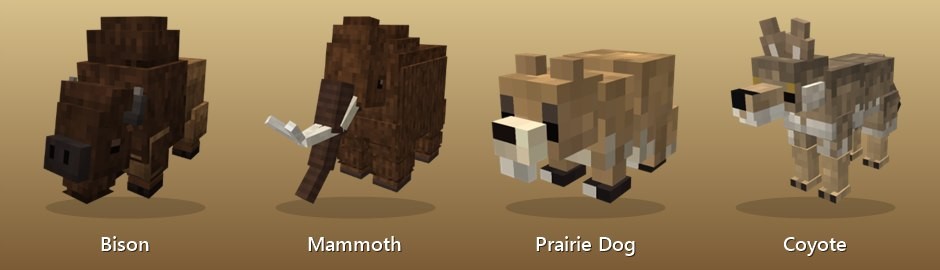
- Bison – lives in herds on prairies, steppes, and in Yellowstone biomes (geysers, travertine terraces). If you injure it, it will charge at you with its horns.
- Mammoth – huge and rare, lives only near tar pits. It is peaceful but defends itself. It has 90 health. It can be tamed and saddled as a pet.
- Prairie dog – stands on its hind legs and whistles, shy
- Coyote – a predator that attacks when approached closely. It howls at night.
Volcanoes
Active and extinct volcanoes and crater lakes.
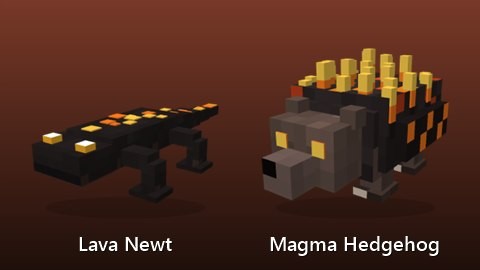
- Lava salamander – appears at night, attacks players and sets them on fire. It is immune to fire.
- Magma hedgehog – harmless, but if you hit it, it pricks you, sets you on fire, and curls into a ball
Pale Gardens and Mushroom Fields
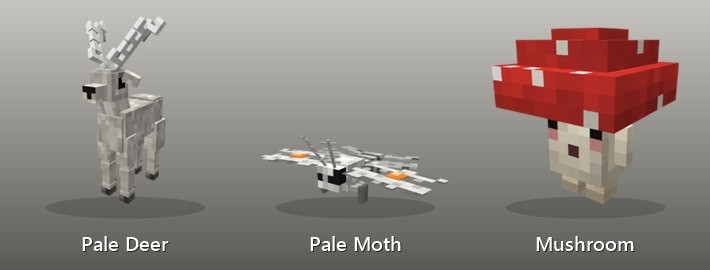
- Pale deer – a shy deer with white antlers covered in hanging pale moss
- Pale moth – a large moth that flies around pale gardens and glows even in the dark
- Mushroom creature – a small mushroom-like creature found in mushroom fields. It can be tamed as a pet.
Ice Beaches
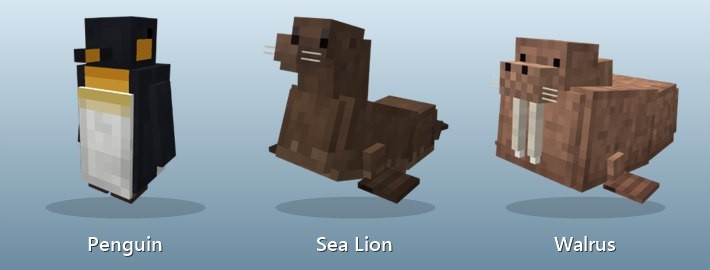
- Penguin – waddles along icy beaches and islands. It can be tamed as a pet.
- Sea lion – shy and loves swimming
- Walrus – peaceful, but if you injure it, it will stab you with its tusks
Ocean
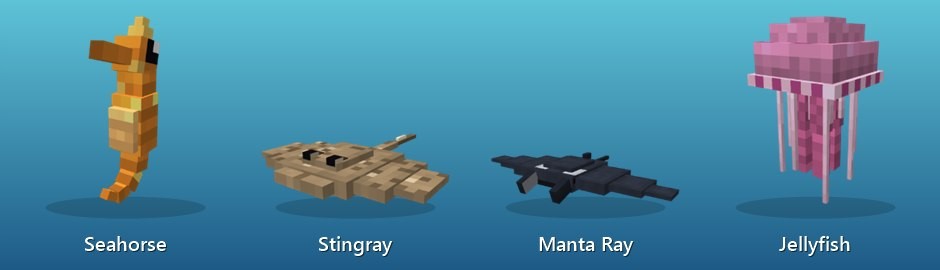
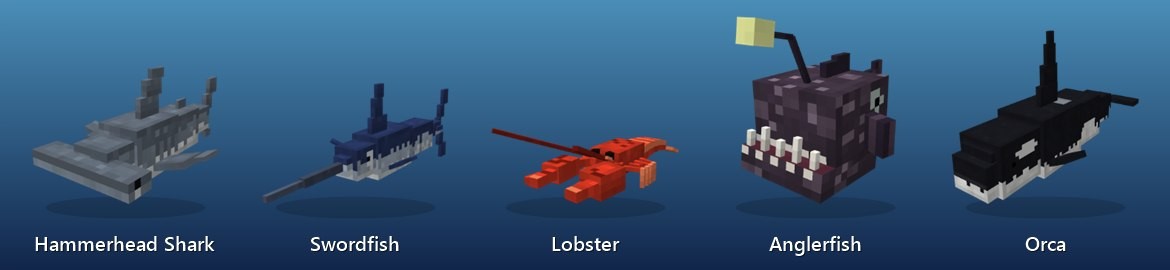
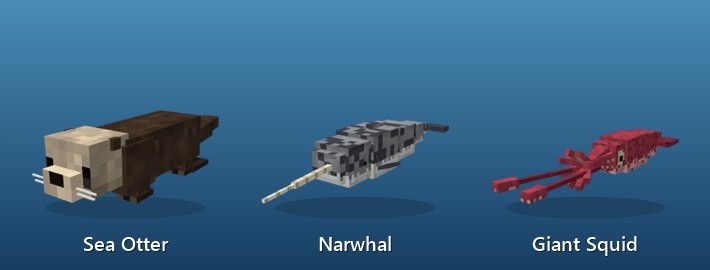
| Location | Animals |
|---|---|
| Warm and coral oceans | seahorse (orange, yellow, pink), stingray, manta ray, jellyfish |
| Normal and cold oceans | hammerhead shark, swordfish, lobster, jellyfish |
| Kelp forests | sea otter – swims on its back |
| Deep sea and ocean trenches | anglerfish – its lure glows in the dark depths; rarely, a giant squid |
| Ice oceans | orca, rare narwhal |
⚠️ Sharks and jellyfish. Hammerhead sharks and orcas will attack if you swim too close. Jellyfish sting and poison you when you touch them. Swordfish, stingrays, narwhals, and anglerfish defend themselves when injured.
Every now and then, you may encounter a blue lobster. It is extremely rare and drops lapis lazuli.
⚠️ Giant Squid – Deep-Sea Mini-Boss. It is very rare, has 150 health, and displays a health bar at the top of the screen. It attacks players, pulls you in with its tentacles, and slows you down. When injured, it may blind you with ink. Rewards include lots of ink, nautilus shells, and, rarely, a Heart of the Sea.
Flying Birds
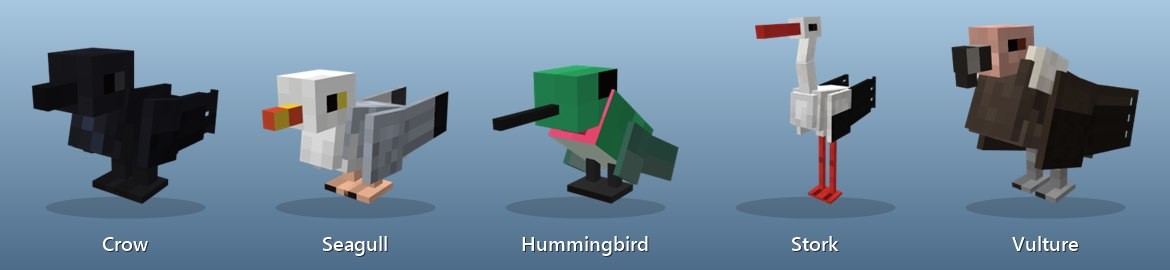
Crows, seagulls, hummingbirds, storks, vultures, eagles, falcons, owls, and toucans really do fly. They fly around their biomes, perch on trees and rocks, and fly away when startled.
Nether
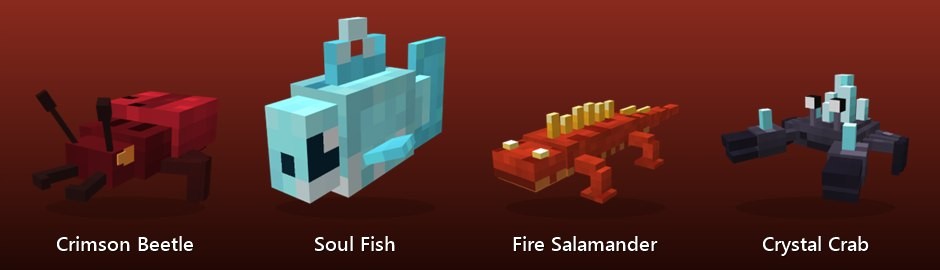
| Biome | Animal |
|---|---|
| Crimson Forest, Bloody Remnants | Crimson beetle – flies in swarms of three, attacks players, and sets them on fire |
| Valley of Souls | soul fish – swims through the air and glows blue, harmless |
| Basalt Deltas, Hot Cliffs, Blazing Nether Plains | fire salamander – walks on lava, defends itself, and sets targets on fire |
| Crystal Plains, Dead Towers, Jagged Mountains | crystal crab – glowing crystals grow on its back, defends itself |
End
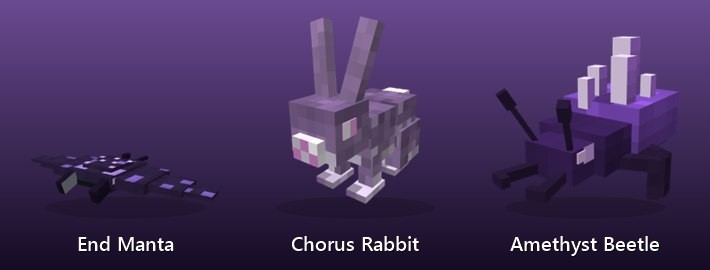
- End manta ray – a giant manta ray that slowly glides through the air
- Chorus rabbit – lives in chorus biomes. If you hit it, it teleports away like an enderman.
- Amethyst beetle – a harmless beetle with amethyst crystals on its back
Dangerous Animals
Predators will attack you if you get too close (approximately 3–6 blocks away). They first warn you with a growl or roar and begin stalking you, giving you time to back away. They include: brown and black bears, lions, lionesses, jaguars, leopards, lynxes, coyotes, crocodiles, rattlesnakes, pythons, and, in the water, hammerhead sharks and orcas.
Animals that always attack players: yetis, scorpions, hyenas (in packs at night), snow leopards, lava salamanders, mosquitoes, crimson beetles, and giant squids.
Peaceful herbivores (elephants, rhinoceroses, bison, mammoths, gorillas, walruses, and others) will not attack you on their own. However, they will defend themselves if you injure them.
💡 Baby and tamed animals never attack, not even lion cubs or bear cubs.
Baby Animals
Most animals also roam with their young. Baby animals are smaller and have larger heads.

Taming
🐾 Pets from the Wild. You can tame a fennec fox, penguin, drake, duck, mushroom creature, ostrich, reindeer, and mammoth by feeding them and adding them as pets in /pets – they follow you, and you can ride ostriches, reindeer, and mammoths after purchasing a saddle. You can find instructions in the Pets article.
You can tame three animals as domestic animals and keep them at home. Hold their food in your hand and right-click the animal. Each feeding consumes one item. The animal becomes tamed once it likes you – sometimes immediately, sometimes after several items.
| Animal | Food | Where to Find It | Special Ability |
|---|---|---|---|
| Flower cow | Dandelion | Flower plains | Flowers grow on its back |
| Monkey | Apple | Jungle | Follows you (the hardest to tame) |
| Flamingo | Raw salmon | Floodplains and salt flats | Stands on one leg |
- A domestic animal has (domestic) next to its name and will not despawn, even when you leave.
- Luring: when you hold an animal's food in your hand, it follows you. This works with wild and tamed animals within 10 blocks – you can use this to lead them home.
- You can also lead an animal using a lead.
- Domestic ducks, ostriches, mushroom creatures, penguins, and reindeer that you tamed previously will remain yours and continue to work as before – a domestic duck will continue laying a duck egg approximately every 5 minutes (it can be eaten and restores two hunger points).
💡 Build them an enclosure and include it in your residence. A domestic animal is still an animal – if someone kills it, it is gone.
Breeding
- Have two domestic animals of the same species (for example, two flower cows) close to each other – within 8 blocks.
- Feed the first one its food. Hearts will appear, and the animal will wait 30 seconds for a partner.
- Feed the second one before that time runs out. A baby animal will be born.
The baby grows up in 20 minutes. The parents then rest for 5 minutes before they can have another baby. A single animal cannot breed on its own. Pets from /pets cannot breed.
Animal Drops
| Animal | Drop |
|---|---|
| Bears, moose, elk, deer, pale deer, reindeer, giraffes, rhinoceroses, elephants, zebras, bison, lions, lionesses, jaguars, leopards, lynxes, snow leopards | Leather and meat (pale deer also drop pale moss, snow leopards occasionally drop white wool) |
| Mammoth | Lots of meat, leather, and tusk bones |
| Wild boar | Pork, occasionally leather |
| Hyena, coyote, gorilla, sloth | Leather and bones (gorillas also drop melons, sloths cocoa beans) |
| Duck, drake, ostrich, owl, toucan, eagle, vulture, falcon, crow, seagull, hummingbird, heron, stork, flamingo, penguin | Feathers (ducks and ostriches also drop meat, flamingos drop pink dye) |
| Squirrel, raccoon, skunk, fennec fox, marmot, prairie dog, beaver, chorus rabbit | Rabbit hide (beavers also drop sticks, chorus rabbits chorus fruit) |
| Flower cow | Beef, leather, and dandelions |
| Mushroom creature | Red and brown mushrooms |
| Crocodile | Leather, occasionally bones |
| Yeti | Snowballs, packed ice, white wool, and, with a bit of luck, a diamond |
| Scorpions and snakes | Spider eye, string, or leather |
| Lava salamander, fire salamander, magma hedgehog | Magma cream, rarely blaze powder |
| Pale moth, soul fish | Glowstone dust (soul fish also drop soul sand) |
| Crimson beetle | Crimson fungus and Nether wart |
| Crystal crab | Nether quartz and glowstone dust |
| Amethyst beetle | Amethyst shards |
| End manta ray | Phantom membrane and chorus fruit |
| Mosquito | Occasionally redstone |
| Anglerfish | Glow ink sac |
| Blue lobster | Lapis lazuli (2–5) |
| Hermit crab | Bone meal, rarely a nautilus shell |
| Sea lion, walrus, sea otter | Fish (walruses also drop leather and bones) |
| Narwhal | Fish, prismarine, and a rare trophy: narwhal tusk |
| Giant squid | Ink, glow ink sacs, nautilus shells, and, rarely, a Heart of the Sea |
| Other fish and marine animals | Fish |
| Snails, poison dart frogs, jellyfish | Slimeballs |